Computing
At Willow Primary School, technology is an integral part of our pupils' lives. Our computing curriculum is designed to teach essential life skills to the next generation of digital citizens, giving them the confidence, critical thinking, and technical ability to thrive in a digital world.
Supported by the Jam Coding framework alongside Google Workspace and National Centre for Computing Education (NCCE) best practices, our curriculum covers three main pillars across EYFS, Key Stage 1, and Key Stage 2:
- Computer Science: Algorithmic thinking, programming, and system structures.
- Information Technology: Creating, manipulating, editing, and presenting digital media and data.
- Digital Literacy & Online Safety: Understanding online safety, critical evaluation of content, and safe online citizenship
Curriculum Delivery & Progression
Our curriculum follows a spiral progression model, returning to key pedagogical strands each year to build systematically on prior knowledge:
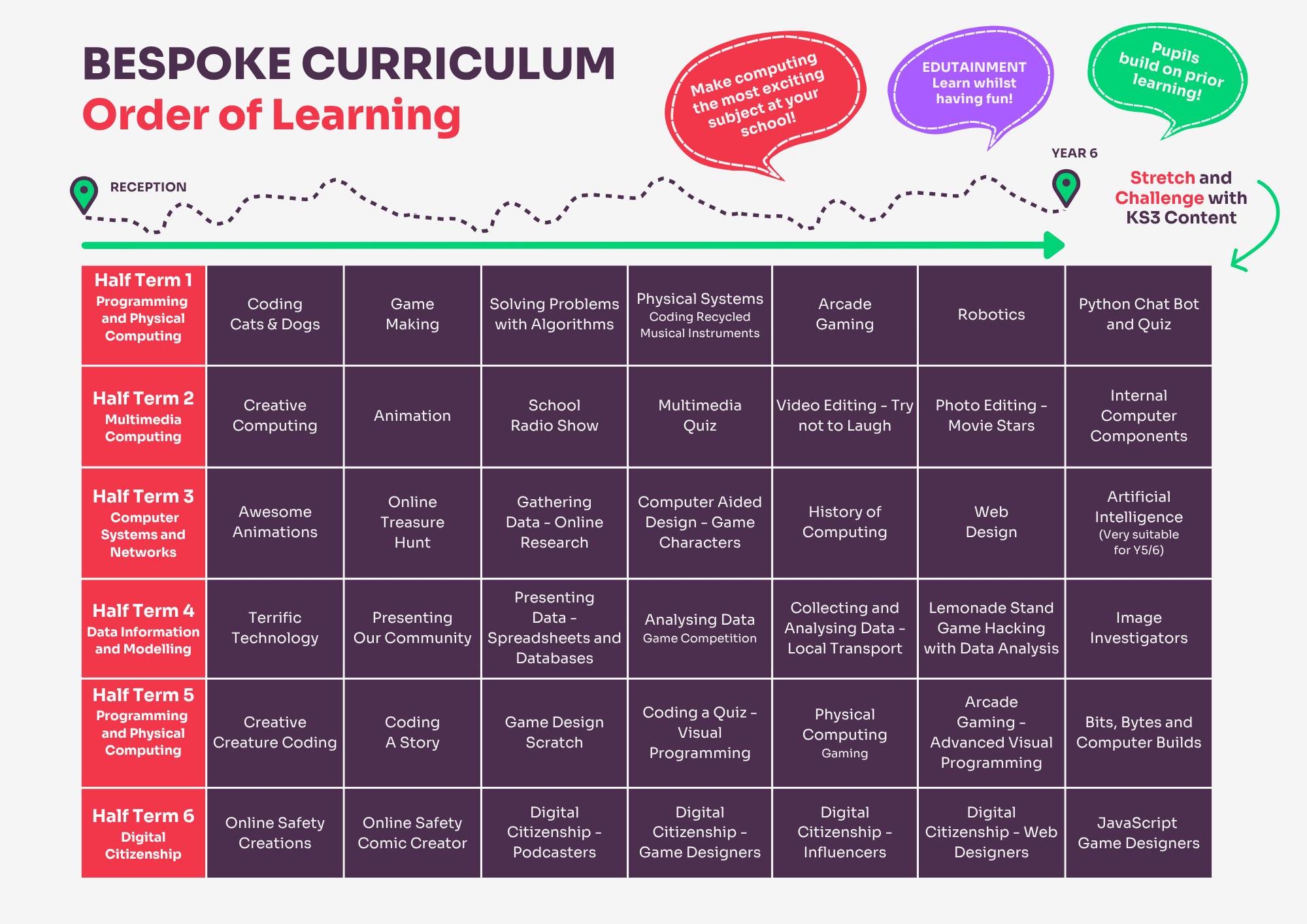
- Programming & Physical Computing: Moving from simple floor robots and block coding to physical circuits, robotics, and advanced visual programming.
- Multimedia Computing: Progressing from basic mouse/keyboard control to digital animation, sound editing, video production, and photo manipulation.
- Computer Systems & Networks: Exploring how technology works—from internet search strategies and online research to 3D computer-aided design (CAD) and web design.
- Data, Information & Modelling: Understanding data collection, spreadsheets, databases, data presentation, and predictive data analysis.
- Digital Citizenship (Online Safety): Taught in every year group through age-appropriate contexts including online safety, cyberbullying, social media awareness, and digital ethics.
Long-Term Plan & Subject Roadmap
Below is our year-by-year curriculum map outlining the specific units covered across each term:
Curriculum Impact
By the end of Key Stage 2, pupils will:
- Be safe, responsible, and discerning users of online technology.
- Be capable of breaking down complex problems logically using computational thinking and debugging.
- Demonstrate fluency across a wide array of software applications, media tools, and coding environments.
- Possess transferable digital skills that prepare them for secondary education and future careers.
Further Information
Jam Coding Bespoke Curriculum Further Details
If you would like to find out more about our Computing curriculum or have questions regarding how it is delivered, please contact the school office or reach out to our Subject Lead at: admin@willow.elp.org.uk